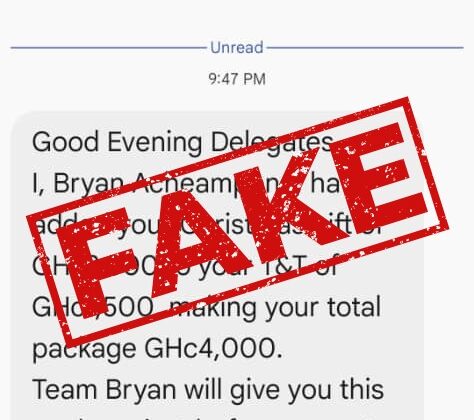
The Bryan Acheampong Campaign has issued a firm response to false messages currently circulating among delegates. The campaign urges delegates to ignore any fake messages circulating, as Dr. Bryan Acheampong has not issued any SMS about money or Christmas gifts.  The campaign urges delegates to stay focused.

The campaign further emphasizes its unwavering commitment to discipline, transparency, and integrity. It called on delegates to disregard attempts to mislead or distract them during this crucial period.  

Only official communications directly from Bryan Acheampong’s official handles or the campaign should be trusted. The campaign continues to champion unity and truth as guiding principles.  

Contact:  

Bryan Acheampong Communications Directorate

📞 054 395 1929  

📞 054 981 7482  

📧 info@bryanacheampong.com  

Tensions are rising in Kasoa following reports of harassment and assault allegedly linked to the immediate past MP and parliamentary candidate, Hawa Koomson.

On the evening of January 26, information reaching party officials indicated that machomen associated with Hawa Koomson confronted and harassed supporters of Bryan Acheampong’s campaign in the Kasoa enclave. Eyewitnesses, including one of the Bryan Cordinators, Felix, narrated how they were beaten and intimidated by the team.

By the morning of January 27, further details emerged suggesting that Hawa Koomson herself was present at the party office and allegedly ordered the assault. Victims reportedly spent the night between the police station and the hospital receiving treatment, underscoring the seriousness of the incident.

This development comes against the backdrop of Hawa Koomson’s own recent ordeal. During the Ablekuma North by-election, she was reportedly assaulted by NDC-aligned groups, an incident that drew widespread condemnation. Observers note that the current Kasoa episode adds another layer of tension to Ghana’s already charged political atmosphere, raising concerns.

Party members are now calling on headquarters to clarify security arrangements at regional, constituency, and national levels, stressing the urgent need for protection of supporters during Saturdays election. They argue that without clear measures, such incidents risk undermining confidence in the democratic process and discouraging grassroots participation.

For many in Kasoa, the situation feels like a cycle of harassment orchestrated by Hawa Koomson, a known supporter of Dr. Mahamadu Bawumia. Supporters are urging leadership to step in decisively, not only to safeguard lives but also to restore calm and ensure that political competition remains peaceful and fair.

The case has since been reporter to the Kasoa police, and statements taken.

The New Patriotic Party (NPP), without any attempt to sweep our internal challenges under the carpet, has been and still is a pillar of Ghana’s democracy and a restorer of “Development in Freedom”. Our political tradition in the history of our dear nation, Ghana, has seen struggles, shown courage, and shed blood towards achieving a society where leaders are elected rather than imposed, and where development comes with freedom and not at the expense of the people’s freedom.

In the 4th Republic, the New Patriotic Party has successfully elected four (4) presidential candidates through about seven (7) highly competitive presidential primaries. In a space of about 34 years, we have witnessed the election of Prof. Albert Adu Boahen, President John Agyekum Kufour, President Nana Akufo-Addo, and H.E Dr. Mahamadu Bawumia.

Come the 31st day of January, in the year 2026, as the largest political party in the history of Ghana, once more,  a constitutional duty hangs on our neck. NPP, a decision is upon us. A decision that in no uncertain terms must necessarily revive hope in party people and restore trust with the Ghanaian people. The enormity of our responsibility as NPP delegates in the “31st Decision” cannot be precisely photographed by any number of words. 

Hon. Kennedy Ohene Agyapong, Hon. Dr. Bryan Acheampong, H.E Dr.

Mahamudu Bawumia, Hon. Dr. Yaw Adutwum, and Engr. Kwabena Agyei Agyepong are the “noble 5” who have presented themselves to be elected as the NPP’s flag bearer for the 2028 general elections. These are party heroes who indeed qualify to lead the NPP as presidential candidate.

These presidential aspirants are gentlemen who come to the table with various and varying content in terms of knowledge, experience, and exposure. It is also true that the “noble 5” have their own peculiar strengths as well as weaknesses which will matter if any of them is presented as the party’s presidential candidate for the 2028 elections. 

In all fairness, each one of the five can serve our dear country as president, however, history gives a clear verdict that in a group of people who qualify as president, circumstances can offer one of them the best chance to win an election. This is where NPP finds itself today. All five can govern as president, but we must win political power first. The big question: who then can best unite the NPP and win the trust of the Ghanaian people?

And so while I am deeply convinced that the five gentlemen are all fit for the position of a president, I have no doubt in my mind that one of them is the most fit for the purposes of uniting the rank and file of the NPP and winning the 2028 GENERAL ELECTION. And that one person is Dr. Bryan Acheampong.

In view of the current state of the New Patriotic Party, I will put emphasis on party unity as the first and best criterion to choose who leads us come January 31, 2026. In the year 2000, unity offered us victory in the general election with the candidature of J.A Kufour. In the 2008 general election, glaring lack of unity was responsible for that unforgettable defeat, however, when we came together in unity, the 2016 election became a different story with same presidential candidate, Nana Akufo-Addo.

The failure to unite the NPP towards the 2024 general election gave us our worst ever electoral performance in the party’s recent history. What is most frightening is the fact that the very forces which failed to foster unity are still present and most active this time around. Going into the 2028 election, the biggest threat to the NPP is not NDC, but the NPP itself. The biggest hindrance to our electoral success is the unchecked bitterness out the political rivalry between the camp of Hon. Kennedy Agyapong and that of H.E Dr. Bawumia.

The immeasurable levels of antagonism and verbal abuse of which both sides are guilty, has poisoned the morale of our grassroots and weakened our party structures contributing hugely to the indiscipline dwelling in our party today. 

I am therefore in deepest agreement with most of our party people across the country as well as the well-meaning Ghanaians who recently on day-today basis advise the NPP delegates to vote for a presidential candidate outside the two “fighting camps” who can truly unite all the factions. Now is the time to look beyond both Hon Ken and H.E Dr Bawumia, and I humbly ask, why not Bryan?

The constitution of the New Patriotic Party states clearly that the party exists to win political power to develop Ghana in freedom. I therefore ask again, and humbly so, if the “31st Decision” is about winning the 2028 election, then why not Bryan?

There is absolutely no doubt about the need for the NPP to restore discipline, rebrand itself, and rewin the trust of the Ghanaian electorate. This is non-negotiable, and I ask once more, why not Bryan?

Why not Bryan, if he is the hope of the aged and the embodiment of the aspirations of the young voter? Why not Bryan?

Why not Bryan, if he is the NPP’s surest and strongest bridge between Ken and Bawumia, and just within 4 months he has been able to energize the NPP base barely a year after a painful electoral defeat? Why not Bryan?

Why not Bryan, at this crucial time that the business community, the academia, the middle class and floating voters are expressing their confidence in him as a young impactful political and business leader? Why not Bryan?

Dear Delegates, I humbly plead with you to be ears to the Ghanaian people and be faithful to the constitution of the NPP which sums up our common objective of winning election 2028 for the betterment of Ghana. As you step into the booth on 31st January 2026, remember that you are standing in for the ordinary people in your polling stations, electoral areas, and constituencies. Let us respond positively to the most important question of our time. WHY NOT BRYAN?

The name remains;

Barima Sarpong Kumankuma Proud Product of Dawu L/A Asante Jamasi.

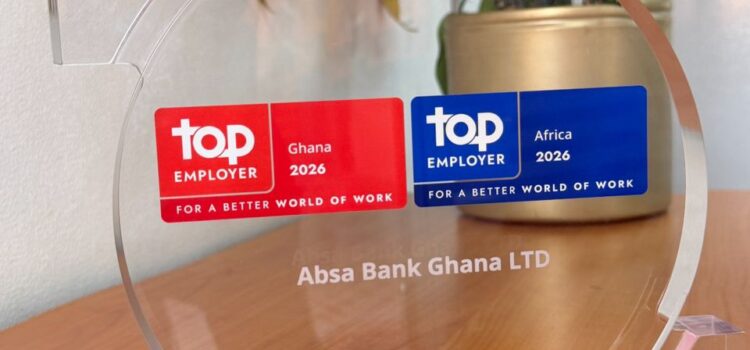
For the fifth consecutive year, Absa has been recognised as a Top Employer for 2026 by the Top Employers Institute (TEI), following an independent assessment of its people practices across Botswana, Ghana, Kenya, South Africa, Zambia, and Mauritius, with Absa Ghana further achieving the number one Top Employer ranking in its market.

Absa achieved an overall group score of 93.66%, an increase from 90.15% in 2025 and materially above the global benchmark of 85.9%. All markets recorded overall scores above 87%, with Absa Bank Botswana delivering the largest year-on-year improvement of 5.53 percentage points. Ghana recorded the highest overall score at 97.38%, while notable improvements were also recorded in Kenya and South Africa, each improving by 4.94 percentage points. Absa Bank Zambia improved by more than 4 percentage points, showcasing Absa’s relentless focus on people-focused policies and processes.

Achieving the certification across all six markets underscores the effectiveness of Absa’s approach to human capital management within the financial services sector in Africa, as assessed against international standards.

“The way people think about work is fundamentally changing, and this shift is redefining the relationship between employers and employees. Organisations must be clear and deliberate about the value they offer, ranging from purpose and culture to growth and flexibility, while being equally transparent about the standards, accountability and performance they expect in return. This clarity is essential to building trust, attracting top talent and creating workplaces where people can truly thrive,” said Jeanett Modise, Absa Group Chief Human Capital Officer. “We have focused on sharpening how we define and communicate the Absa employee value proposition, so that it reflects the realities of how people want to work and build their careers. Being recognised as a Top Employer for the fifth consecutive year provides independent validation that this approach is resonating with our people and being applied consistently across our markets.”

Charles Russon, Group Executive for Africa Regions, said, “The continued growth in the number of Absa markets achieving Top Employer certification is a powerful endorsement of our people-first strategy and our commitment to building workplaces where excellence, inclusion and high performance can thrive. We are particularly proud of Absa Ghana’s achievement as the number one Top Employer in its market, which reflects the depth of our leadership capability, the strength of our culture and our deliberate investment in our people across the region to deliver for our clients.”

William Easmon, Human Capital Director for Absa Bank Ghana, highlighted the significance of the recognition: “Being Ghana’s number one Top Employer reflects the trust, fairness, and clarity our people experience at work every day. We remain committed to upholding these values, ensuring that they feel valued and respected in a transparent and equitable workplace. By strengthening our culture of openness and integrity, we will continue raising the employee experience standard in Ghana.”

A notable outcome of the assessment was Absa’s achievement of full scores of 100% in Business Strategy, Leadership, and Performance, demonstrating a high degree of consistency in how strategy is translated into leadership practice and organisational performance. Strong results were also recorded in Ethics and Integrity, with Absa achieving a score of 99.49%, outperforming the global benchmark by 1.45% and the industry benchmark by nearly 2%. The Work Environment score rose to 98.41%, positioning Absa more than 10% above the global benchmark and almost 8% above the industry benchmark.

The largest year-on-year gains were recorded in offboarding (+18%), diversity, equity and inclusion (+11.34%), rewards and recognition (+8.78%), sustainability (+7.35%), and employer branding (+5.28%).

TEI is a global authority on recognising excellence in Human Capital practices. Through their globally recognised Certification Programme, using data-driven insights, they enable companies to advance their talent attraction, development, engagement, and retention strategies.

The progress seen in this year’s assessment has been underpinned by a more deliberate and data-led approach to understanding the employee experience. Absa continues to strengthen how it listens to its people, introducing more robust benchmarking and analytics that provide deeper insight into trust and engagement across the organisation. This has enabled more focused intervention where it matters most, supporting improvements across the employee lifecycle and reinforcing a culture of openness and accountability. Alongside this, the Group has sharpened how it defines and delivers its employee value proposition, with a clear emphasis on sustaining a high-performance culture while prioritising wellbeing.

Ongoing investment in leadership development, supported by refreshed frameworks and coaching approaches, has reinforced consistency in how strategy is led and delivered. At the same time, the Group has advanced its work on inclusion, skills development, and data-driven retention, ensuring that critical capabilities are built and sustained over time. Together, these actions have supported the broad-based improvements recorded across markets and underpinned the Group’s overall performance in the assessment.

“Being recognised for the fifth consecutive year gives us a clear line of sight into how our culture and people practices have evolved over time. Aligning to our group strategy, we continue to strive to be customer obsessed, equipping our employees to deliver excellence for our customers. Over this period, we have been deliberate about strengthening our employee value proposition, focusing on the quality of work people do, how they are led, how they learn and grow, and how we support their wellbeing,” said Modise.

“That foundation is shaping the kind of workplace we are building for the future, one that is fit for a changing world of work and able to attract and develop the talent our organisation depends on, the talent that enshrines our purpose of empowering Africa’s tomorrow, together, one story at a time.”

Ends

For further information about Absa Group Limited, visit www.absa.africa

The Adabraka District Court has remanded Christford Affadu Danful, popularly known as Ekow Black, into police custody in connection with a viral assault incident and fresh allegations of sextortion.

The suspect appeared before the court on Friday, January 16, 2026, where Her Worship Nana Abena Asoh Owusu Omenyo ordered his remand to allow police to continue ongoing investigations. He is scheduled to reappear in court on January 21, 2026.

The decision follows investigations into a widely circulated video that allegedly captures the suspect physically assaulting a woman, an incident that sparked intense public outrage across social media platforms.

Beyond the assault case, law enforcement agencies are also probing additional allegations of sextortion, in which the suspect is accused of threatening to release intimate images of individuals. These claims reportedly emerged during the course of ongoing investigations.

Prosecutors informed the court that further time was required to complete investigations and assess the possibility of additional charges being brought against the suspect.

The case has drawn widespread public attention, renewing conversations around gender-based violence, cybercrime, and the misuse of digital platforms.

Police have assured the public that investigations are progressing and have appealed to individuals with relevant information to assist authorities as the case continues.

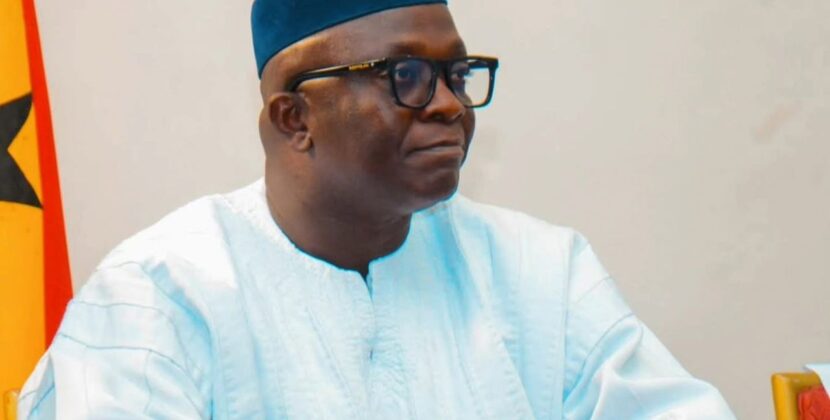
The Electoral Commission (EC) has announced that a parliamentary by-election will be held in the Ayawaso East Constituency on Tuesday, March 3, 2026, following the death of the sitting Member of Parliament, Mahama Naser Toure.

In a statement dated January 16, 2026, the Commission explained that the seat has become vacant in line with Article 112(5) of the 1992 Constitution (as amended), making it mandatory to conduct a by-election.

The EC said it will receive nomination forms from prospective candidates at the Ayawaso East Municipal Office of the Commission at North Ridge from Monday, February 9, to Wednesday, February 11, 2026. Nominations will be accepted daily between 9:00 am and 12:00 pm, and 2:00 pm and 5:00 pm.

Interested candidates are required to download nomination forms from the EC’s official website between Friday, January 16, and Wednesday, February 11, 2026.

According to the Commission, completed nomination forms may be submitted personally by the candidate or by either the proposer or seconder to the Returning Officer within the stipulated period.

Each candidate’s nomination must be proposed and seconded by two registered voters in the constituency and supported by 18 additional registered voters who assent to the nomination. The forms must also be duly endorsed with the candidate’s consent.

Candidates are required to submit two copies of a recent bust-size passport photograph with a red background, clearly showing the full face and ears, at the time of filing.

The filing fee has been fixed at GH¢10,000 per candidate. However, female candidates and persons with disabilities (PWDs) will pay a reduced fee of GH¢7,500. All nomination forms must be submitted in quadruplicate.

The Electoral Commission has urged prospective candidates and the general public to take note of the guidelines and comply fully with all nomination requirements to ensure a smooth and credible electoral process.

By Dr Edward Nartey Botchway, Managing Director, Absa Bank Ghana LTD

Banking has always been built on the currency of trust. Whether it is a parent paying school fees, a trader receiving money for goods, or a customer transferring funds to a bank account, every transaction depends on the assurance that funds will remain safe, accessible, and received by the right person within a reasonable period.

That trust is no longer shaped only by brand familiarity. It is shaped by customer experiences that, over time, become expected standards. It must be earned, protected, and renewed through everyday conduct.

Today’s customer decides which bank to rely on based on what happens when they transact, when they need support, and when the unexpected occurs. Money may be the visible asset that banks safeguard, but trust is the invisible one that determines whether a customer remains loyal or leaves.

The Mechanics of Trust in Contemporary Banking

In practical terms, trust in modern banking is built through consistent, reliable service delivery. Customers develop confidence in a bank when its systems are reliable, transactions are predictable, and funds are accessible across digital and physical channels. That trust deepens when support is available during moments of friction, when issues are resolved transparently, and when banks demonstrate continuity and accountability over time. These mechanics are cumulative, are reinforced through everyday experiences, and tested most rigorously in challenging times.

It is against these practical measures that we continue to assess our own progress at Absa Bank Ghana.

Strengthening Trust Through Everyday Excellence

Our brand promise, Your Story Matters, reflects our commitment to treat every customer as an individual, not an account number. It reminds us that trust grows when we continually excel in the basics customers depend on. Protecting that trust is a deliberate, shared responsibility across Absa Bank Ghana, from leadership to every colleague.

Our focus this year has been on strengthening the foundations of our customers’ trust by improving access, reliability and convenience across the channels customers use most. This includes meeting customers where they prefer to bank, whether on a smartphone, a feature phone, an Agency Banking location, or in one of our branches, and ensuring that those experiences are dependable and intuitive.

Another priority has been reducing friction in payments processes so that households and businesses can plan with clarity and confidence. We have continued to improve digital payment experiences and expand contactless payment options, while also supporting businesses with simpler, more affordable ways to accept electronic payments. These efforts are aimed at reducing uncertainty in everyday transactions and making payments more predictable and secure.

Trust Beyond Transactions

Trust also deepens when a bank demonstrates commitment beyond transactions. Customers pay attention to whether an institution contributes meaningfully to the communities in which it operates, particularly during periods of economic uncertainty.

Through our Force for Good initiatives, Absa continues to invest in programmes that support long-term development and shared prosperity. Last year, our financial literacy programme reached 126,000 students across 159 senior high schools, blending foundational financial education with career guidance to help young people make more informed choices about money, work, and opportunity.

In 2025, we also handed over 22 boreholes to underserved rural communities, improving access to clean drinking water and contributing to better health and livelihoods for an estimated 42,000 people. Through our ReadyToWork programme, our proprietary skills development curriculum, more than 13,000 tertiary students across eight institutions were equipped with skills in demand to support their transition into the world of work.

These initiatives matter because trust is strengthened when institutions demonstrate a long-term commitment to shared value and progress, rather than a narrow focus on short-term transactions and gains. As banking evolves, the mechanics of trust must also evolve, supported by strong governance, ethical leadership and innovation grounded in responsibility.
At Absa Bank Ghana, our commitment is to keep strengthening trust daily by focusing relentlessly on what customers truly value: reliability, transparency and customer-centricity. Your story matters, and we are privileged to be the bank you trust to protect it.

ENDS

The New Patriotic Party’s (NPP) Akwatia by-election candidate, Kwame Asumadu, has appealed to party members and Ghanaians to uphold peace, unity, and discipline ahead of the NPP’s presidential primaries scheduled for January 31.

Mr. Asumadu made the call while speaking to the media after a peace walk to mobilise support in the Akwatia Constituency of the Eastern Region. He urged supporters to reject violence, bitterness, and internal division before, during, and after the primaries, stressing that political leadership must be anchored in unity rather than conflict.

According to him, leadership is ordained by God and should be pursued with humility, respect, and a commitment to the collective good of the party and the nation.

Mr. Asumadu noted that the strength of the NPP has always rested in its ability to remain united, particularly at critical moments such as the selection of a presidential candidate. He therefore called on party members to place the interest of the NPP above individual ambitions and work together to strengthen the party ahead of future elections.

He further emphasised that peaceful internal processes are essential to maintaining public confidence in the party and positioning it as a credible alternative for governance.

Some NPP members who took part in the walk explained that the exercise was aimed at energising the grassroots and promoting reconciliation within the party. They noted that the call for peace and unity is especially significant as the party seeks to heal internal divisions following its defeat in the September by-election.

Participants expressed optimism that the message of unity will help consolidate support and foster harmony as the party prepares for the upcoming primaries.

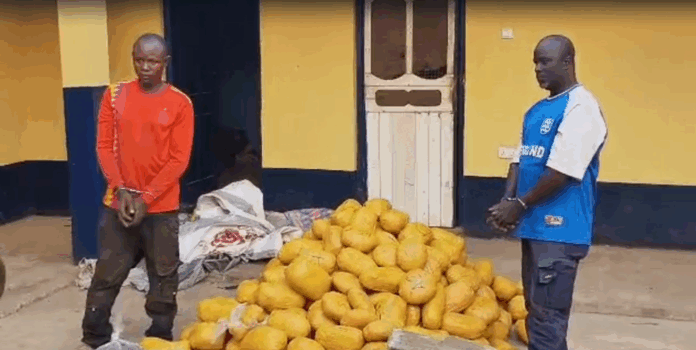
Yeji, Bono East Region — Police in Yeji in the Pru East District of the Bono East Region have intercepted a commercial bus allegedly transporting 396 parcels of dried leaves suspected to be cannabis, following a targeted intelligence-led operation.

The interception occurred on Sunday, January 11, when officers, acting on sustained intelligence and surveillance, stopped a Tata bus with registration number GR 3232 L near the Barrier area in front of the Yeji Police Station.

The driver of the vehicle, Seidu Alhassan, and his mate, Issah Osman, were arrested to assist ongoing investigations aimed at identifying the owner and source of the suspected narcotics.

A search conducted on the bus led to the discovery of several sacks containing dried leaves believed to be cannabis. The substances were later counted and confirmed to be 396 parcels.

According to the police, preliminary investigations suggest that the suspected drugs were transported from Bimbilla in the Northern Region, passed through Kumasi in the Ashanti Region, and were intended for further distribution.

Speaking to journalists, the Yeji District Police Commander, DSP Ahenkrah, said intelligence reports had indicated that the vehicle was conveying illegal drugs. He disclosed that the driver initially denied knowledge of the cargo until the sacks were offloaded and inspected by officers.

DSP Ahenkrah added that the bus has since been impounded, while the seized substances are being kept as exhibits. Arrangements are underway to forward the items to the Police Forensic Science Laboratory for analysis.

The driver and his mate remain in police custody as investigations continue. DSP Ahenkrah reaffirmed the Ghana Police Service’s commitment to combating drug trafficking and ensuring that persons involved in the illicit drug trade are brought to justice.

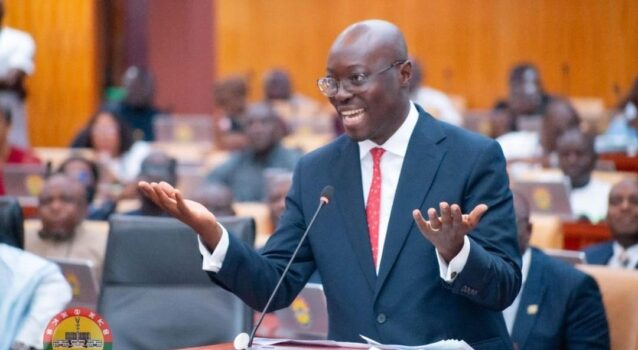
The Ministry of Finance has announced that the government has taken decisive steps to resolve Ghana’s long-standing energy sector debt, describing the move as a major milestone towards restoring financial stability and rebuilding international confidence.

In a statement issued on Monday, January 12, the Ministry disclosed that as of December 31, 2025, the John Dramani Mahama administration had paid a total of US$1.47 billion to stabilise and reset the energy sector.

According to the Ministry, when President Mahama assumed office in January 2025, the energy sector was on the brink of collapse following years of unpaid gas supply bills from the Offshore Cape Three Points (OCTP) Sankofa field. The arrears had led to the full exhaustion of the US$500 million World Bank Partial Risk Guarantee (PRG) established under the previous administration.

The PRG, created in 2015, served as a critical risk-mitigation instrument that enabled nearly US$8 billion in private sector investment through the Sankofa Gas Project by guaranteeing payments to partners ENI and Vitol in the event of government defaults.

The Ministry stated that government has since fully repaid US$597.15 million, including interest, drawn on the World Bank guarantee. This repayment has restored the PRG facility in full and strengthened Ghana’s credibility with international financial institutions and investors.

Between January and December 2025, government also cleared all outstanding gas invoices owed to ENI and Vitol, amounting to approximately US$480 million, bringing Ghana completely up to date on its obligations to the Sankofa partners.

In addition, the statement revealed that government paid about US$393 million in legacy debts to Independent Power Producers (IPPs) in 2025 alone. This followed the successful renegotiation of all IPP agreements to secure improved value for money and reduce long-term fiscal pressures.

The Ministry further noted that ongoing engagements with upstream partners, including Tullow Oil and Jubilee Field partners, have resulted in an agreed roadmap to ensure full and timely payment for gas supplies, improve power reliability, and support industrial growth.

These engagements, the Ministry said, have already led to increased gas production, significantly reducing Ghana’s reliance on expensive liquid fuels for power generation and contributing to a more sustainable and resilient energy sector.

The government maintains that the reforms mark a critical step towards securing reliable electricity supply, strengthening investor confidence, and supporting long-term economic growth.